
Coordinating DRT with Call Centers: Hybrid Access Models

While most Demand-Responsive Transport (DRT) systems are accessed via mobile apps, many users still rely on traditional communication channels. Elderly passengers, people without smartphones, or those unfamiliar with digital tools often need human-assisted booking options.
This is where call center integration becomes essential—not just as an add-on, but as a core feature of an inclusive DRT strategy.
Why Hybrid Access Matters
Public mobility should be universal. App-only systems risk excluding those who lack digital access. By enabling bookings via call centers, cities ensure DRT services are:
- Accessible to all demographics
- Compliant with equity and inclusion mandates
- Resilient in case of app failure or poor connectivity
Hybrid access also reassures new users, helping them transition into digital use over time.
How Shotl Supports Call Center Integration
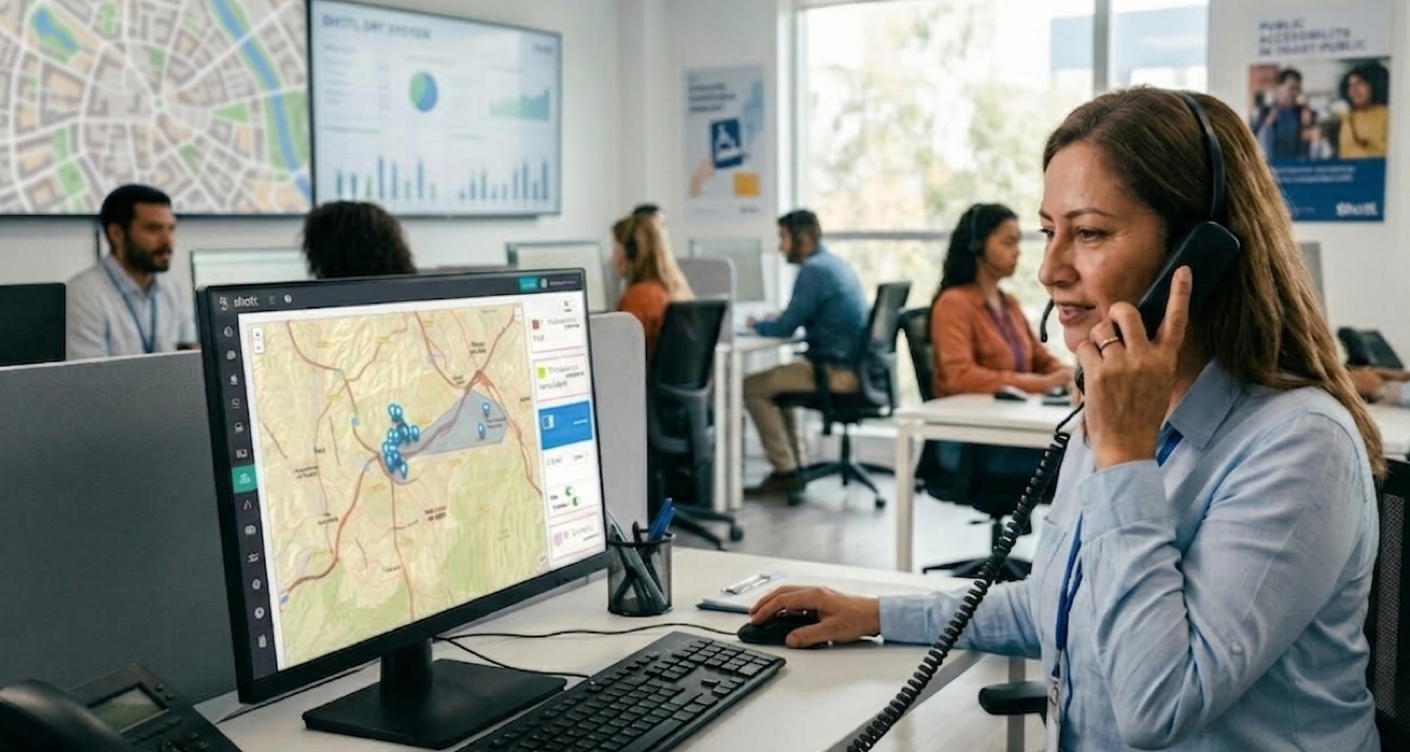
The Shotl platform includes a dedicated operator dashboard that allows call agents to:
- Create, modify, or cancel rides on behalf of users
- Search and manage user profiles
- View real-time vehicle positions and ETAs
- Access full ride history and scheduled bookings
All bookings—app or call—are processed by the same algorithm, ensuring consistent service quality.
Multiple User Profiles, One Unified System
Whether a booking comes from an app or a phone, Shotl consolidates all data into a central database. This allows operators to:
- Track demand trends across channels
- Avoid double bookings or conflicting requests
- Apply the same pricing and prioritization rules to all users
This unified approach improves service planning and accountability.
Configuring Access Permissions
Administrators can configure access levels for different call center roles, such as:
- Basic booking agent
- Supervisor with override privileges
- Admin with full zone and stop configuration rights
This ensures secure and traceable interventions, while maintaining system integrity.
Supporting Bulk and Recurring Bookings
Call centers often assist users with recurring transport needs—like weekly medical appointments. Shotl supports multi-day reservations and pattern-based scheduling, allowing agents to book trips over weeks or months.
Monitoring Call-Based Performance
Agencies can also monitor call-center usage with specific KPIs:
- Number of rides booked by phone
- Peak hours for call demand
- Average call handling time
This enables better staffing and continuous improvement of human support channels.
Conclusion
Call center coordination isn’t just a legacy feature—it’s a strategic advantage. By combining digital and human access, DRT becomes a truly inclusive service, ready to meet the needs of every user, every time.
Popular posts

25.10.21
The real mobility disruption
Shaping mobility trends over the next few decades will have a huge impact on how society as a whole evolves. The mobility model has a big impact on environmental and social equilibrium and is undoubtedly linked to greenhouse gas emissions and economic
Albert Tresserras

26.03.24
Future Mobility: Shotl at Intertraffic & AIMAS 2024
As April approaches, the anticipation is building for two significant events that promise to shape the future of transportation: Intertraffic & AIMAS 2024.
Sílvia Coronado

25.11.24
Revolutionizing Urban Transport for an AV Future
Shotl's future is closely tied to the development of shared autonomous vehicles. The platform is already prepared to integrate this emerging technology, which will revolutionise urban mobility.