
Train, Trail, mybuxi: The KIMM Project Redefining Alpine Mobility

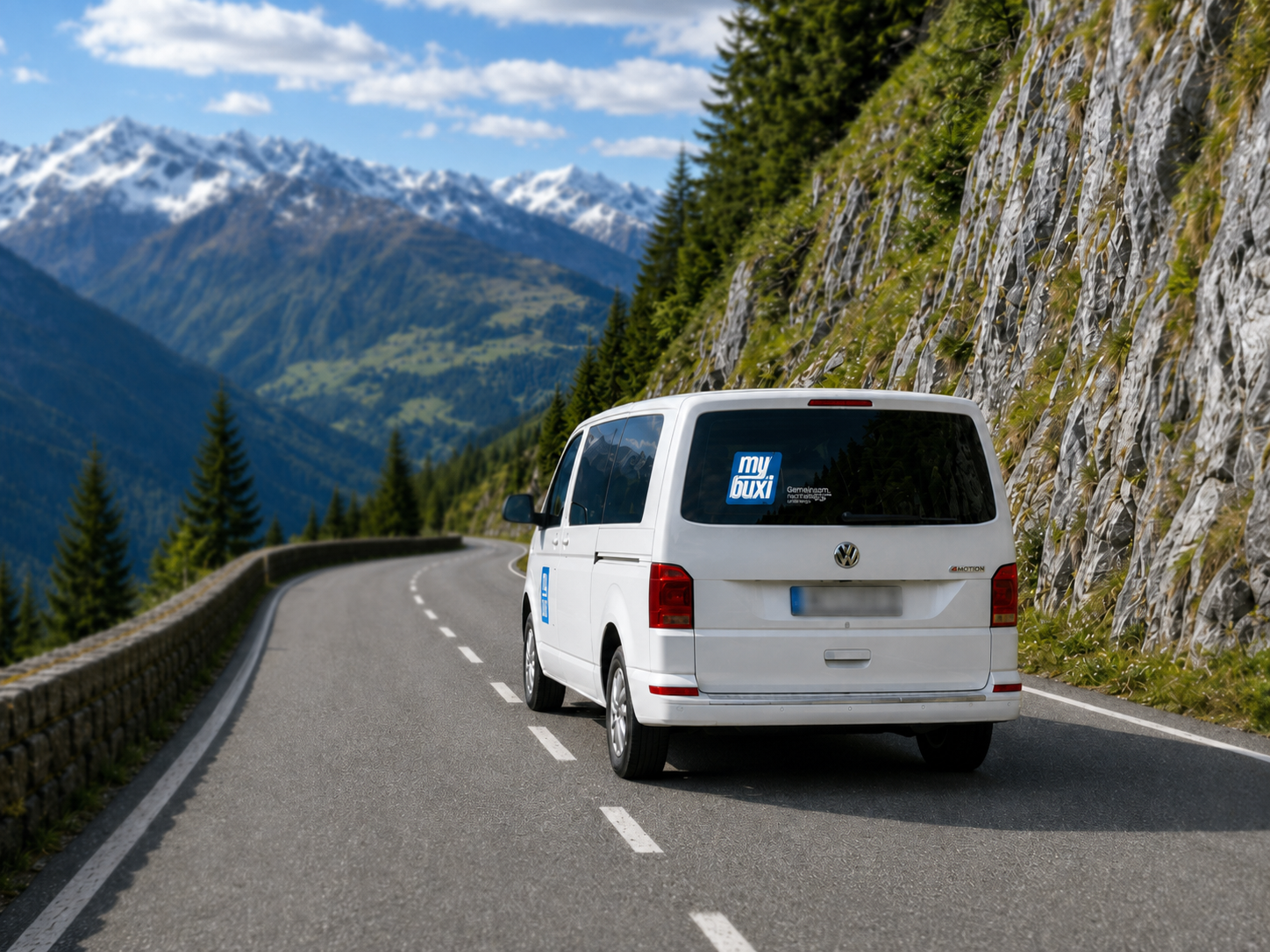
In mountain regions, mobility rarely ends at the destination. It usually ends at a train station or a bus stop, leaving the final stretch, the actual last mile to a hotel, a trailhead, or a front door, unaddressed. That gap is exactly what the KIMM project set out to close in Switzerland's Gotthard region, and since June 2026, travellers can finally plan and book that entire door-to-door journey, public transport and on-demand mobility together, in a single step, thanks to mybuxi's on-demand service, powered by Shotl.
What Is KIMM?
KIMM (Kombiniertes, innovatives, emissionsfreies Mobilitätskonzept) is an Innotour-backed project that began in 2023 with a clear goal: rethink mobility in peripheral tourist regions by connecting existing and new transport options into one coherent journey. In the Gotthard region, that meant building on services already in place, mybuxi's on-demand shuttle, Sponti-Car car-sharing, and PubliBike bike-sharing, layered on top of the existing public transport network.
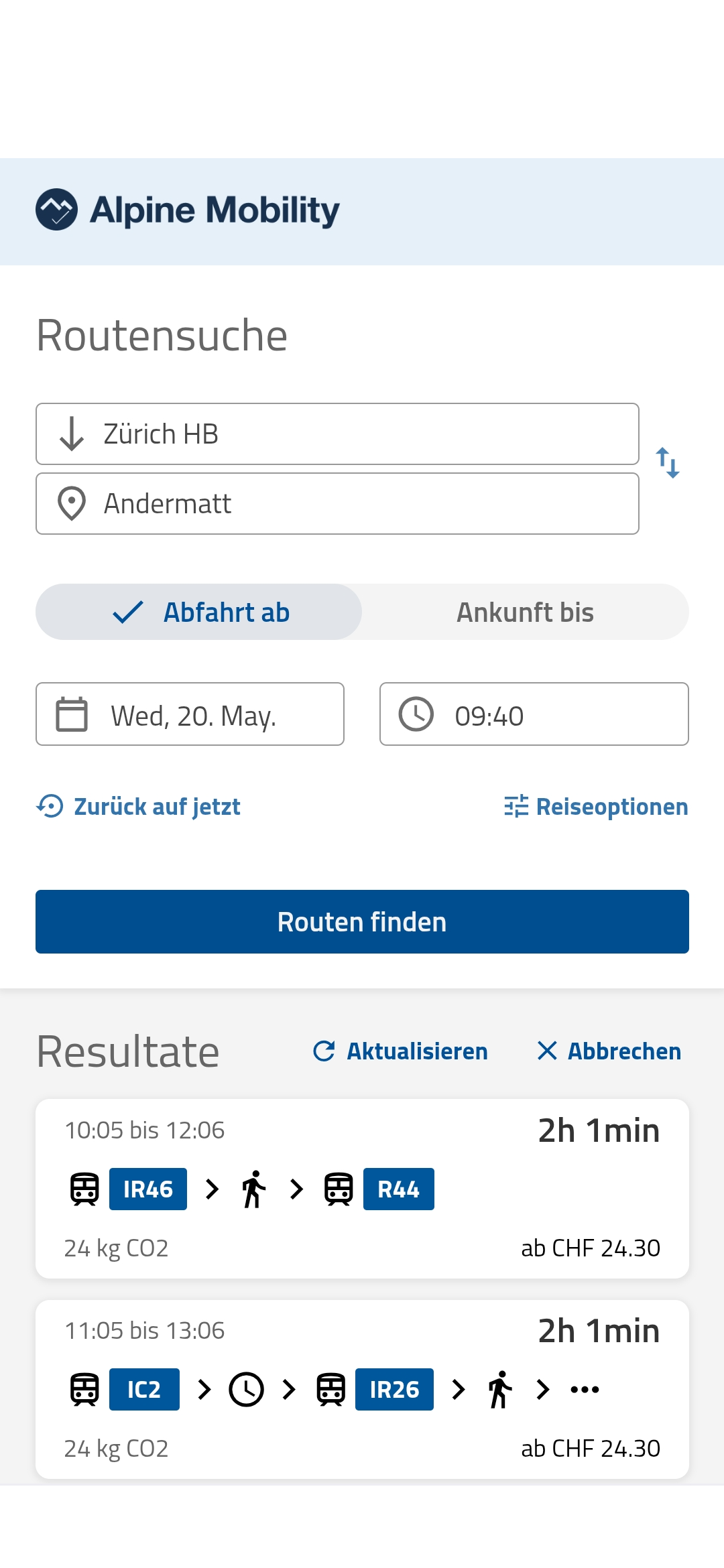
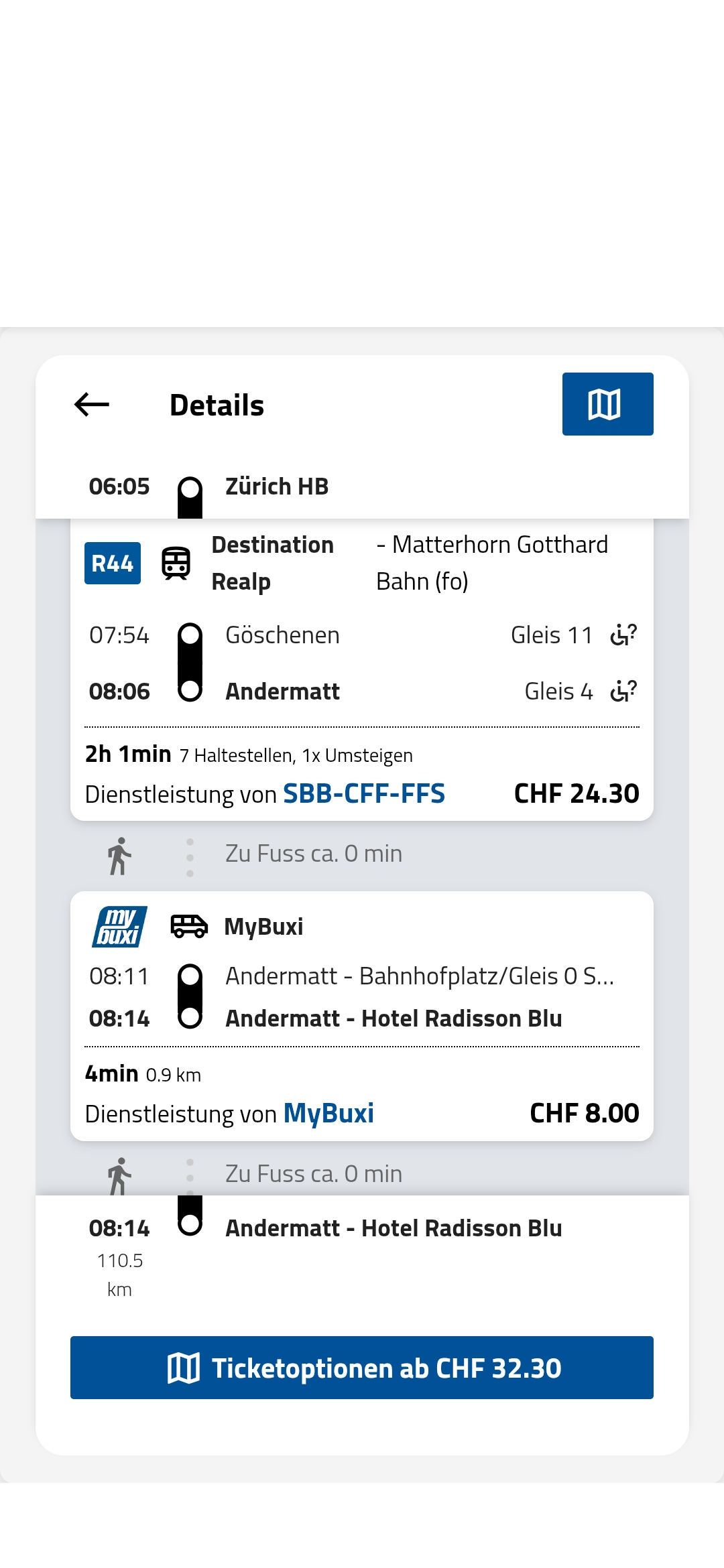
What was missing until now was the digital thread connecting all of it. As of June 2026, a new booking platform closes that gap: travellers can combine a public transport journey with a mybuxi on-demand ride into a single booking, something with few real equivalents anywhere else in Switzerland. Car-sharing and bike-sharing options can also be factored into the journey plan for trips beyond the immediate area or for more flexible local travel.
Rather than launching a new, standalone app, the project deliberately built the booking function into channels people already use to plan their trips, including the alpine-mobility.ch platform, the Andermatt-Urserntal tourism destination site, and mybuxi's own Gotthard region page. No additional app download is required, and the same booking capability is designed to be embedded into other websites over time, from municipalities to hotels and local businesses.
The Technology Behind the Single Booking: Shotl's API
Combining a train ticket with an on-demand shuttle ride in one single booking sounds simple from the traveller's side, but it depends on two very different systems, a public transport journey planner and an on-demand dispatch platform, being able to talk to each other in real time. That's the piece of the puzzle Shotl's API makes possible.
Through Shotl's API, mybuxi's availability, routing, and booking capabilities are exposed directly to the alpine-mobility.ch platform and the other channels built into KIMM. When a traveller plans a trip that ends with a mybuxi ride, the external platform can query real-time availability for that leg, get a quote, and confirm the booking, all without leaving the same journey-planning flow used for the train portion of the trip. The result is a single, coherent booking rather than two separate transactions stitched together by the traveller themselves.
This is the principle behind Shotl's well-designed mobility API: it doesn't just move data between systems, it lets an external platform treat an on-demand service as a fully bookable leg of a larger journey, with the same reliability and real-time accuracy as booking directly through the mybuxi app. For KIMM specifically, that meant Shotl's platform needed to support a booking flow initiated from outside its own app entirely, triggered instead by a partner's journey planner, and still return the same accurate, dependable trip that a passenger booking directly would receive.
A Conversation with Andreas Kronawitter, Managing Director of mybuxi
To understand what KIMM means in practice, both for the region and for the future of on-demand transport in alpine areas, we put a few questions to Andreas Kronawitter, founder and managing director of mybuxi.
Shotl: mybuxi has been operating in the Gotthard region for a while now. What made this the right place to pilot a fully integrated experience like KIMM?
The partners. And the “use cases”. With both public transport companies Südostbahn (SOB) and Matterhorn-Gotthard-Bahn (MGB) as well as Publibike and Sponti-Car we had all partners on board. The Andermatt Swiss Alps has the need for sustainable transport in this alpine regions: guests and employees want or need to move around. And the canton Uri, the communities and the tourism organisation supported the project.
Shotl: One of the goals behind KIMM is to make it easier for visitors to arrive by public transport and get around without a car once they're here. What difference do you expect this to make for tourism in a region like Andermatt?
The last – or first mile is the critical factor. A train ride through the swiss alps is nice, but if you have to carry your luggage from the train station to the hotel, especially as a family, you take the car. And if the transport services are in place but you have to search for them a long time, we’ll end with the same result. Thus, the digital connection is as relevant as the physical.
Shotl: KIMM brings together a substantial group of partners, transport operators, tourism bodies, and public funding programmes, alongside mybuxi. How is a project with this many stakeholders governed day to day, and how did the different companies involved divide responsibility for making it work?
ASA and mybuxi are partners for several years now, and we had strong ties with SOB even longer. It was a very complex project and it was only possible because we trusted each other. We needed more time than expected due to discussions along the way, but because we had a clear vision of our goal, we kept going.
Shotl: The booking platform currently combines public transport with mybuxi in the Gotthard region. Is there a plan to expand this same model to other mybuxi areas that also run on Shotl's platform?
Yes, it is, and it is already prepared. Because Switzerland has an integrated public transport platform, we already can link all public transport services. We will add another 5 of the existing 7 mybuxi regions this year and possibly the 2 new areas we are setting up currently. This extension is quite easy to do, because the Shotl API delivers everything we need. Thus it is only setting the parameters.
The Journey Continues
The booking platform is live now, accessible through alpine-mobility.ch, the Andermatt-Urserntal tourism site, and mybuxi's Gotthard region page, with public transport across all of Switzerland and the mybuxi Gotthard region already combinable in one booking.
For a project that started in 2023 with a fairly ambitious premise (connecting an entire region's mix of transport options into one seamless trip) reaching a live, bookable product marks a genuine milestone, not just for the Gotthard region, but for how alpine and peripheral areas across Switzerland might approach mobility going forward, and for what Shotl's technology can enable when it's opened up to partners beyond its own app.
Experience Andermatt in action:
Interested in how a similar integration between public transport and on-demand mobility could work for your region? Get in touch with our team at hello@shotl.com to explore what's possible.
Popular posts

29.03.21
Spreading Success in Sant Cugat
Shotl launches its third Demand Responsive Transport (DRT) service in Sant Cugat, Spain.
Roger Cumeras

27.09.21
Congresses kick off again
After being paralyzed by the global pandemic, the world is slowly starting to turn again. Clear examples are the recovery of mobility and the return of in-person attendance at fairs, congresses, and events.
Jonàs Ramírez

24.01.22
How to get older users on board with on-demand
We chat with Adrià Ramirez Papell, Mobility Project Manager at Shotl, to get his insights into how to ensure maximum uptake of demand-responsive transit (DRT) among a user group traditionally considered challenging: the elderly.